

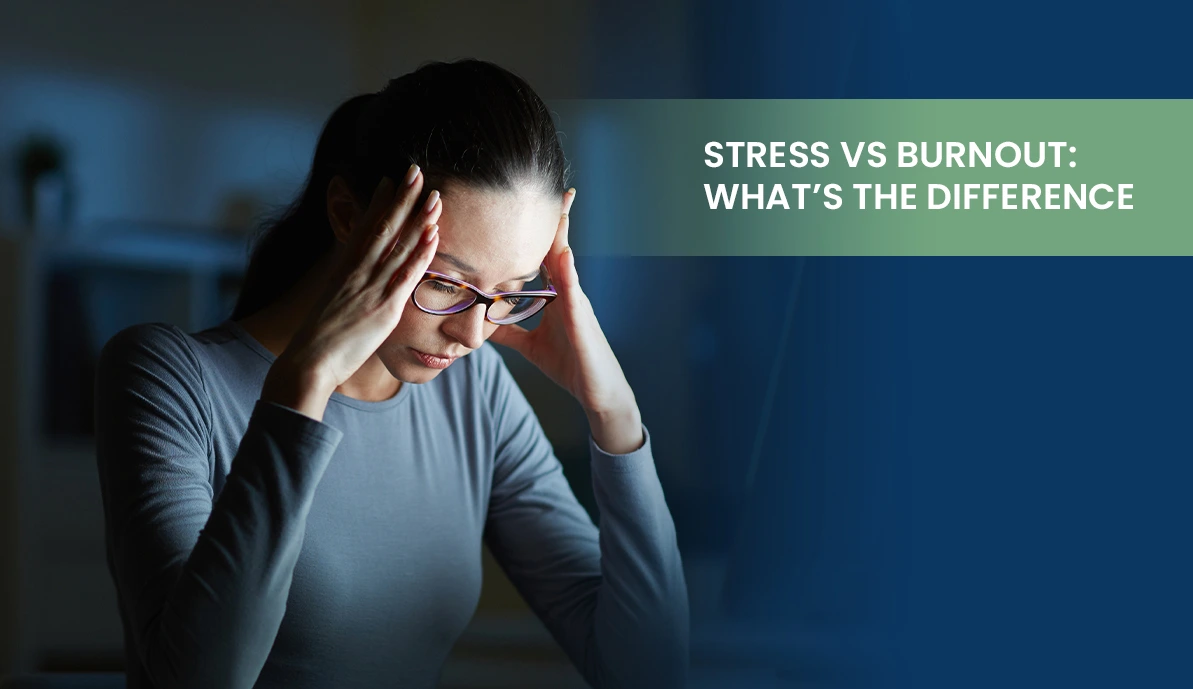
Being tired or overwhelmed is a common experience in today’s world. However, many people often misuse the terms “stress” and “burnout” interchangeably. Although they influence your mental and physical well-being, they are not the same.
Stress is normally a brief experience, often caused by pressure. Burnout is a prolonged experience that is usually more serious. Let’s look at how these two conditions are different.
What is Stress?
Stress is the body’s natural response to challenges or pressures. It comes from relationships, daily responsibilities, and work. Short-term stress often improves focus and performance. However, severe stress can impact your daily life. Some of the common symptoms of stress are:
- Irritablity
- Fatigue
- Headaches
- Restlessness
- Feeling anxious
Stress generally goes away once the situation becomes normal. Managing stress early prevents enduring issues. Stress affects your energy levels and sleep. It also impacts your decision-making ability. You can reduce stress by participating in breathing exercises or walking. Small changes in your daily routine decrease its effect.
What is Burnout?
Burnout is a state of mental, emotional, and physical exhaustion. It develops when a person experiences prolonged stress. Unlike stress, burnout doesn’t go away fast. Common symptoms of burnout are:
- Feeling drained and unmotivated
- Losing interest in daily work
- Feeling helpless or detached
Burnout affects both personal and professional life. Ignoring the symptoms leads to serious health problems. It causes low immunity and sleep problems. Recovery takes time and constant effort. Seek medical support if the situation worsens.
Key Differences Between Stress and Burnout
Stress is a reaction to excessive pressure, and burnout results from prolonged exposure to it. While stress involves “too much”, burnout is about “not enough”. Let’s discuss the differences in detail.
Duration and Intensity
Stress is usually temporary and situation-related. It appears and disappears depending on the situation. Burnout, on the other hand, takes a long time to develop and lasts for a long time. It is more intense and overwhelming. While stress leaves you feeling overactive, burnout leaves you feeling empty. Stress gives you a sense of control; burnout is associated with feelings of losing control. This is a big difference.
Emotional Impact
Stress makes you feel frustrated or anxious. However, you still have hope to recover from it. Burnout often leads to emotional exhaustion, and people start feeling disconnected. Burnout affects motivation and reduces interest in work and life. Stress still allows a person to remain productive. Burnout lowers performance.
Physical Effects
Both stress and burnout have a negative effect on the human body. For example, stress causes headaches and muscle tension. In addition, it causes sleep disturbances. On the other hand, burnout causes fatigue and reduced energy. Burnout also weakens one’s immune system. This makes a person sick. In addition, it takes a lot of time and rest to recover from burnout.
Causes of Stress and Burnout
Short-term problems cause stress. Deadlines, examinations, or personal problems are examples of this. These problems usually have a reason. When this problem is solved, stress goes away.
Long-term stress is the main cause of burnout. Lack of rest from work is a common reason for this. Lack of support or control is another reason. It usually takes a long time to develop. Unbalanced lifestyle factors, lack of sleep, and no relaxation are factors.

How to Manage Stress and Burnout
You can manage stress by following simple steps. These are:
- Take part in light physical activities
- Practice deep breathing to increase oxygen intake
- Follow relaxation techniques to improve mental health
- Take frequent breaks to improve focus and energy
Similarly, you can manage burnout to some extent if you follow these steps:
- Take ample rest after work
- Listen to meditative music for a soothing effect
- Take professional help to ease chronic pain
- Speak with friends and family and seek assistance
Setting boundaries is significant for both conditions. Avoid multitasking and remain focused. Prioritize tasks and focus on time management. Healthy habits and a balanced diet improve overall health.
When to Seek Help
Constant stress needs medical attention. Ignoring it may lead to burnout. Early steps prevent major problems. Always listen to your body and mind. Burnout often needs specialized medical assistance. If you feel tired or unable to focus, consult a doctor. Counseling and therapy work well. Doctors often prescribe antidepressants to treat both conditions. You must prioritize mental health. A healthy mind can keep your body fit and fine.
Conclusion
While both stress and burnout are similar in nature, they differ in duration. While stress is only temporary, burnout is long-lasting. Recognizing the difference between stress and burnout help you take the right steps at the right time to protect your health. Taking care of your mental health is very important as it can lead you to a healthy life. Consult your doctor and take the right dosage of antidepressants to get relief from both conditions. Follow Medipedia to learn how antidepressants work in curing stress, anxiety, and burnout.