

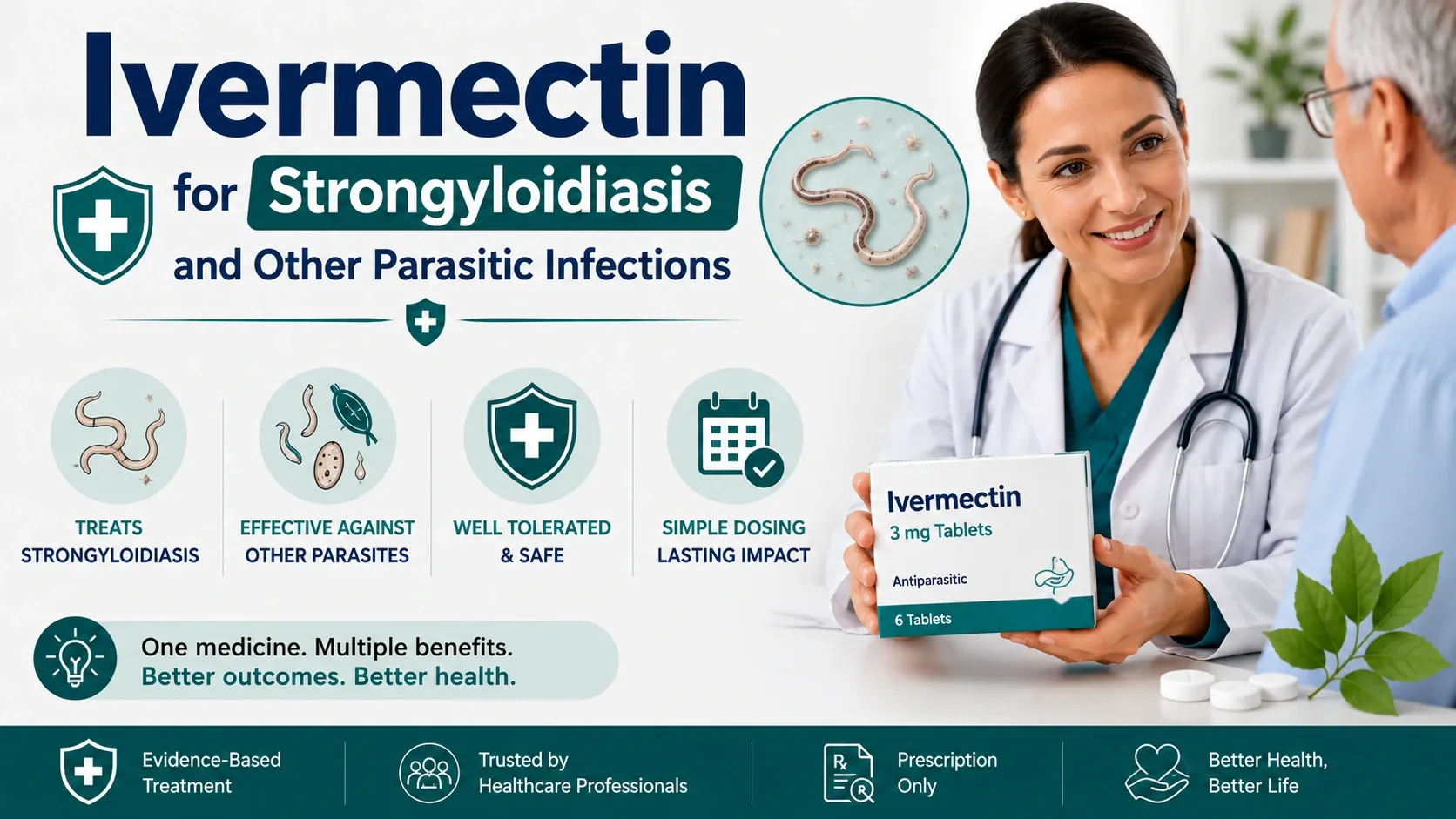
Parasitic infections may affect the digestive system, the skin, and the body’s overall well-being. A medication commonly recommended to treat certain parasitic infections is Ivermectin. This medication aids in eradicating certain parasites.
How Ivermectin Treats Strongyloidiasis
Strongyloidiasis results from the worm Strongyloides stercoralis. An individual may acquire this infection after coming into contact with contaminated soil. Even though some people have minimal symptoms, others can develop severe complications if the infection goes unchecked.
Common Symptoms
Symptoms of strongyloidiasis include:
- Abdominal pain
- Skin rash
- Weight loss
- Diarrhea
- Nausea
- Vomitting
Evimectin A (Ivermectin) works by paralyzing and killing the parasites, allowing the body to clear the infection more effectively.

Other Parasitic Infections Treated With Ivermectin
Ivermectin is also used to treat several other parasitic conditions.
Additional Uses
Healthcare providers may prescribe Ivermectin for:
- Scabies
- Head lice
- Onchocerciasis (river blindness)
- Certain intestinal parasite infections
Treatment plans vary depending on the infection and the patient’s health status.
Final Thoughts
Ivermectin is effective for treating strongyloidiasis, among other parasitic conditions. It will be beneficial for patients to recognise their symptoms early and receive appropriate treatment to avoid complications. Ensure that you consult your doctor before using Ivermectin. Follow Medipedia to learn more about Ivermectin and its use in treating worm and parasitic infections. In some studies, health experts also suggested using this medical ingredient to treat COVID-19 symptoms and help reduce cancer cell growth. Do not take this medication on your own. Always consult a doctor and take the right dosage to get optimal results.