

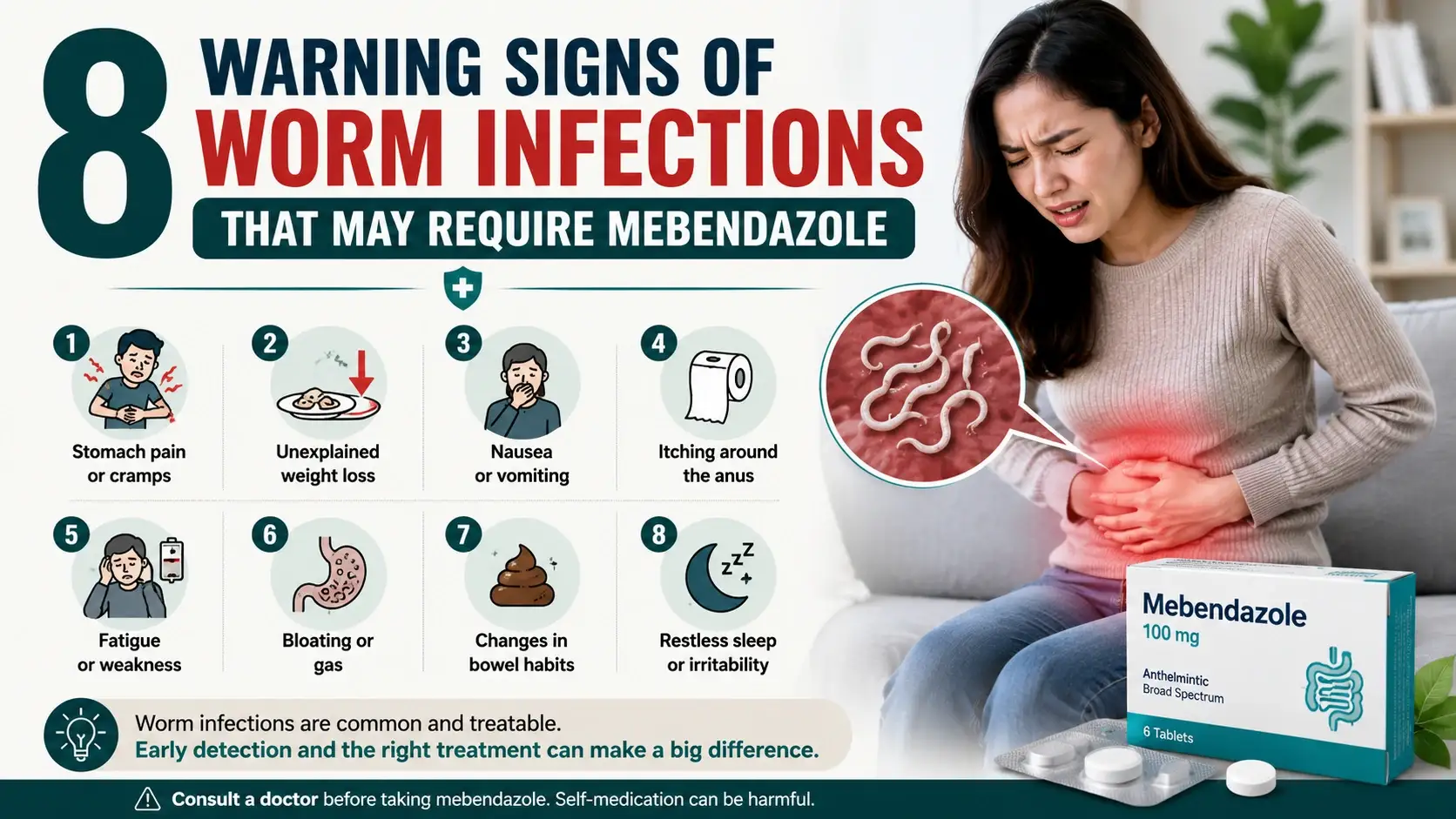
Parasites can infect a person at any time in their life and cause worm infections. Such infections occur when parasites enter the human body, with food, soil, and poor hygiene as sources of infection. Some infections do not require medication; however, others may require drugs like Mebendazole.
Common Signs of a Worm Infection
Symptoms differ depending on the type of worm involved. However, you should not ignore numerous warning signs.
1. Persistent Stomach Pain
Frequent abdominal discomfort and cramping indicate the existence of intestinal worms. The pain ranges from mild to chronic.
2. Unexplained Weight Loss
Worms absorb nutrients from the body, leading to unexpected weight loss despite regular eating habits.
3. Itching Around the Anus
Anal itching, especially at night, is a common symptom of pinworm infections that often disrupts sleep.
4. Nausea and Vomiting
Certain worm infections can irritate the digestive system, causing ongoing nausea or occasional vomiting.
Additional Warning Signs
Other symptoms also suggest a parasitic infection that needs medical attention.
5. Diarrhea
Frequent loose motion or digestive upset can occur when worms affect the intestines.
6. Fatigue and Weakness
Nutrient deficiencies caused by worms lead to fatigue, weakness, and reduced energy levels.
7. Visible Worms in Stool
Detecting worms or worm segments in stool is a strong indication of an infection and should be properly examined under medical supervision.
8. Loss of Appetite
Some people experience a noticeable drop in appetite, while others feel hungrier than usual.
Take Control of Your Health Today
Quickly check your symptoms and understand your prescriptions with our smart, easy-to-use AI tools.
When to Consider Mebendazole
Doctors generally prescribe Mebendazole to treat certain intestinal worm infections. However, proper diagnosis is essential before initiating treatment. A physician can confirm the type and severity of the infection and recommend the appropriate medication. In most cases, doctors recommend a Mebendazole 100 mg dosage for mild to moderate symptoms and a Mebendazole 500 mg dosage for severe symptoms. Today, some doctors also prescribe this medication to treat certain COVID-19 symptoms. Although the medicine works well in reducing the coronavirus’s impact, there is a need for further research.
Conclusion
Persistent stomach pain, itching, diarrhea, fatigue, and visible worms in stool are important warning signs of a possible worm infection. Early diagnosis and treatment can help prevent complications and restore overall health. If symptoms persist, consult a healthcare professional to determine whether Mebendazole or another treatment is appropriate. Follow Medipedia to get more information about this antiworm drug. Proper knowledge helps prevent drug abuse.