

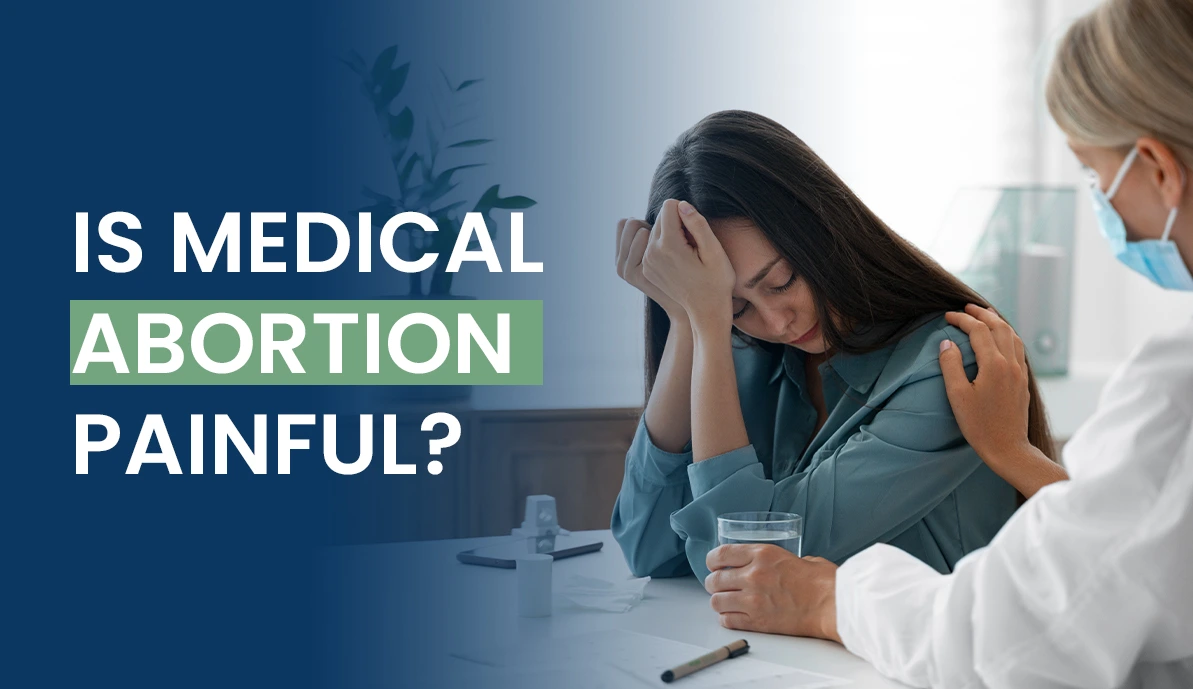
Medical abortion of an early pregnancy is a safe and popular method of terminating a pregnancy. It usually involves two medicines, Mifepristone and Misoprostol. These medicines work together to stop the pregnancy and help the body pass it naturally. This method of termination of pregnancy is popular because it does not involve surgery.
Pain is one of the most common worries women face when considering a medical termination of pregnancy. The experience of a medical termination of pregnancy varies from one woman to another. Some women may experience mild discomfort, while others may experience severe cramping. In this post, we will discuss how a woman feels pain during a medical abortion and learn how to manage it. But before that, let us understand why doctors perform medical abortion.
Why Doctors Perform Medical Abortion
Medical abortion is a very personal decision based on individual circumstances. A woman often has to decide to have a medical abortion if she suspects passing on a congenital disease. Others need to make this decision because of an unwanted pregnancy. Doctors may also use this method to treat a miscarriage that has not been passed, known as a missed abortion. People opt for this method if carrying the fetus to term could put them in danger.
Everyone’s circumstances are unique. Seeking out a provider who understands your medical history and healthcare needs can help you as you make this decision.
How Pain Feels During Medical Abortion
Most women report that the pain is comparable to their period cramps. Once the second medication is ingested, the uterus starts contracting. This is what helps push the pregnancy tissue out. This is the main reason women feel pain during abortion. The degree of pain may vary depending on the period of pregnancy. Abortions that happen early in the pregnancy tend to be less painful. As the pregnancy progresses, the pain gets more intense. The way the body reacts to the pain worsens it.
When Does the Pain Start?
Pain normally starts a few hours after taking Misoprostol. This is the time the body starts responding to the drug. Pain starts mild and intensifies over time. Bleeding also starts at this time. The most severe pain usually lasts a few hours. This is the time the uterus is actively emptying. After that, pain usually decreases but may persist at a low level over the next few days. Some women feel weak during this time.
Other Symptoms Along with Pain
Medical abortion can bring other symptoms besides pain. These are nausea, vomiting, diarrhea, and a low-grade fever. Some women also feel chills or headaches. These symptoms are temporary and go away on their own. Severe bleeding is another symptom that women experience during medical abortion. It can be heavier than a normal period. Passing clots is a part of the abortion. However, a doctor checks for heavy bleeding to avert further complications.
How to Manage the Pain
Doctors control pain during a medical abortion in a simple way. They usually advise patients to take pain-relieving medicines such as “Ibuprofen.” This reduces cramps and makes them comfortable. It is important to take the correct dosage. Applying a heating pad to the lower abdomen will help reduce the pain. Lying down in a comfortable posture will reduce the pain. Drinking plenty of water and eating light food helps. Emotional support from a trusted person makes a great difference in such situations.
When to Seek Medical Assistance
While some pain is normal, one must not ignore some signs. If the pain is unbearable and medicines fail to bring some relief, it is best to see a doctor. If the bleeding is heavy, the patient must seek emergency medical attention.
Often, patients have a high fever lasting more than a day. They must not ignore the symptoms, and no one knows how it could affect the patients’ health. Severe weakness or dizziness is another symptom. It is always best to be on the side of caution and get help if unsure. Doctors are always available to help and ensure everything is safe.
Emotional Experience Matters Too
Pain is not just a physical suffering during a medical abortion. Women often feel sad and suffer from emotional stress and guilt. Hormonal changes also affect the patient’s mood. In such a situation, it is always good to speak with someone whom you trust. Proper mental care and support help women overcome the stress, which is as important as physical recovery.
Bonus Tips
A medical abortion is a safe method of terminating a pregnancy. The decision is very personal. If you need this service, know that you’re not alone in the process. Your healthcare provider is available to guide you through the process, ensuring you understand exactly what is happening before, during, and after the procedure. The medical professionals connect you with resources that may help you manage the emotions you may feel during this time. With proper care and support, most women go through it safely and recover well.