

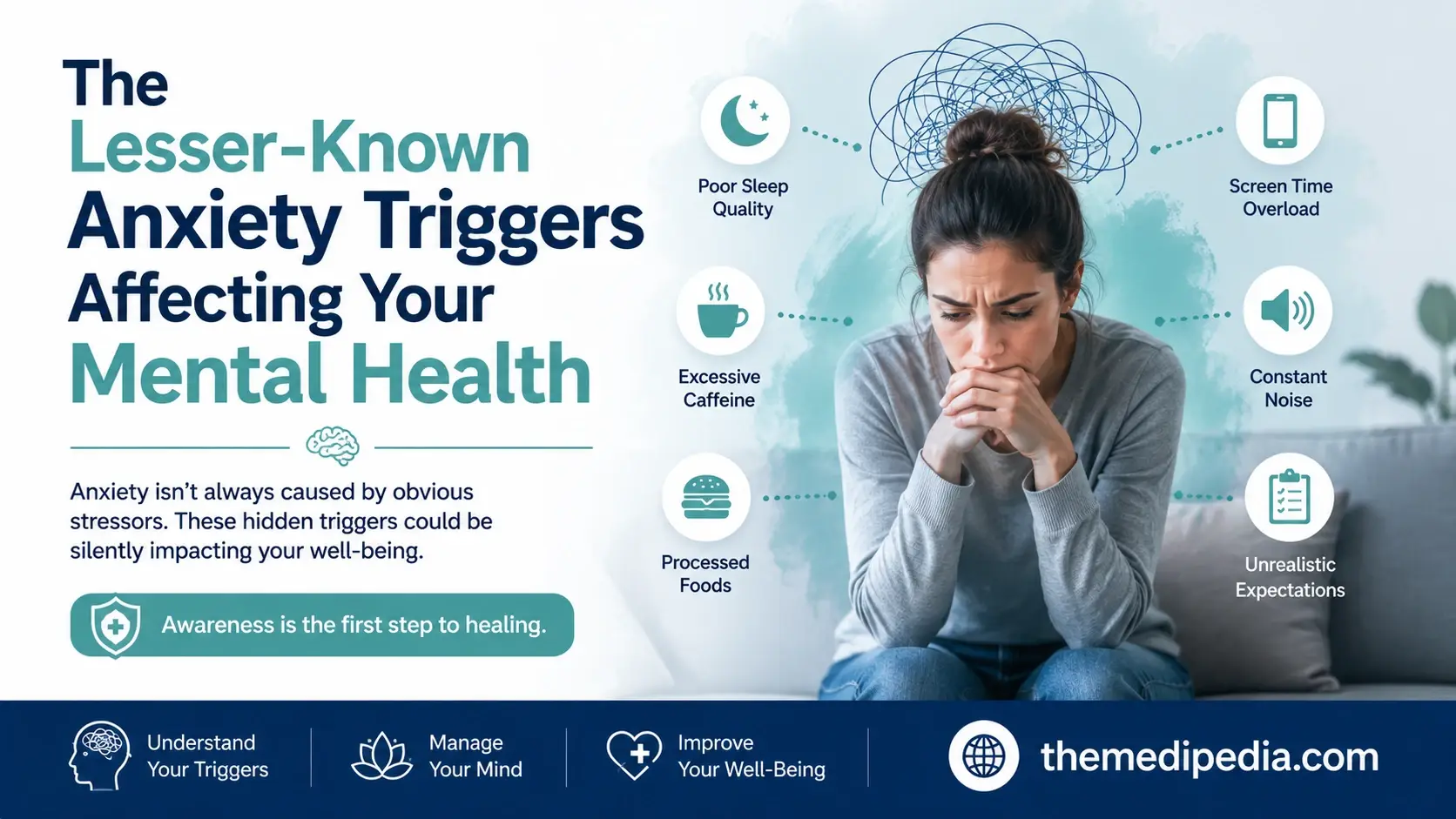
Anxiety is usually associated with some eventful happenings such as an important event in one’s life, stress at work, or money worries. However, many other factors can lead to stress in people’s lives, and people are unaware of them because these factors are not as obvious as the ones mentioned above.
Finding out about these triggers can help in coping with anxiety more efficiently, because then you can understand what causes certain effects on your mental state and make some alterations to improve it.
Take Control of Your Health Today
Quickly check your symptoms and understand your prescriptions with our smart, easy-to-use AI tools.
Why Hidden Anxiety Triggers Matter
Sometimes, however, anxiety does not have an easily recognizable trigger. In such cases, daily habits or one’s surroundings may contribute to rising stress levels.
Symptoms that Point to an Underlying Trigger
- Feeling anxious for no apparent reason
- Trouble focusing on one’s tasks
- Insomnia
- An increased state of irritation
- Worrying
- Muscle tension
These symptoms may be indicative of underlying triggers.
If you are feeling stressed for a couple of days, try the 7 essential vitamins that may help support your mental well-being. You have to understand that stress is a part of our lives. You have to manage the symptoms with a proper diet and key healthy lifestyle habits.
Poor Sleep Quality
Sleep and mental health go hand in hand. Even when one is getting the right amount of hours in bed, insufficient sleep could cause anxiety symptoms.
How Sleep Affects Anxiety
- Heightened emotions
- Stress resistance
- Poor judgment
- Feeling of increased worry
Sleep TIPS
- Maintain a fixed sleeping schedule
- Minimize screen time before bedtime
- Create a comfortable sleeping environment
- Minimize the intake of caffeine
You must also understand that adequate sleep helps improve your mood and mental health. Quality sleep plays a powerful role in emotional wellness, stress management, and a healthier mind.
Excessive Caffeine Consumption
Most individuals rely on coffee or energy drinks to stay awake and alert. However, excessive consumption of caffeine causes feelings that mimic anxiety.
Symptoms of High Intake of Caffeine
- Rapid heart rate
- Agitation
- Trembling
- Inability to relax
If you suffer from anxiety frequently, it is important to watch your caffeine consumption.
Constant Exposure to Negative News
While being knowledgeable matters, incessant consumption of disturbing news can elevate stress and anxiety.
Good News Consumption Practices
- Control news consumption
- Use credible sources of information
- Do not engage in doomscrolling
- Have breaks from social media platforms
Striking a balance in information intake will be beneficial for mental health.
Lack of Physical Activity
Exercise is important for both one’s physical and mental well-being. Being inactive may lead to higher anxiety levels.
Mental Health Benefits from Exercise
- Stress hormone reduction
- Improved mood
- Increased self-confidence
- Helps with sleep quality
Easy Exercises to Do
- Walks
- Biking
- Yoga
- Swimming
One does not need much time to exercise.
Social Comparison on Social Media
Social media usually showcases the high points of our lives. Being compared all the time increases stress and feelings of inadequacy.
Warning Signs
- Feeling bad after checking in
- Achievement comparisons
- Fear of missing out
- Low self-esteem
Taking a break from social media will help you emotionally.
Skipping Meals or Poor Nutrition
Diet plays a role in affecting mood swings. Disruptions in your eating schedule might affect your mood and overall energy levels.
Dietary Intake for Promoting Psychological Well-Being
- Fresh fruits and veggies
- Whole grains
- Protein-rich food sources
- Healthy fats
Bad Eating Habits
- Skipping meals often
- Overeating sweets
- Processed foods
A balanced diet leads to stable emotions.
Clutter and Disorganization
An untidy environment may lead to feeling overwhelmed and difficulty relaxing.
Impact of Clutter on Mental Well-being
- Stress increase
- Difficulty focusing
- Mental exhaustion
- Tasks becoming overwhelming
Simple organizing actions can produce a more tranquil environment.
Perfectionism
Performing at your best is good, yet perfectionism may raise anxiety levels if unrealistic goals are set.
Some Common Traits of Perfectionists
- Fear of failure
- Overanalysis
- Persistent criticism of yourself
- Inability to finish tasks
Accepting progress rather than perfection may lower stress levels.
Relationship Conflict
Arguments with family members, friends, or work colleagues may have more impact on your mental well-being than you think.
Healthy Relationships Strategies
- Open Communication
- Establish Boundaries
- Conflict Resolution
- Getting Support When Needed
Relationships can protect individuals from experiencing anxiety.
Information Overload
In today’s world, we are bombarded by information all the time. This is very distracting for the brain.
How to Avoid Information Overload
- Stay focused on your priorities
- Avoid unneeded distractions
- Allocate time without screens
- Pause for mental rest
Allowing yourself a break can clear your mind.

Bottom Line
Anxiety doesn’t need to be caused by any serious problem in life. The causes of anxiety could actually be mundane, like insufficient sleep, excess intake of caffeine, social media usage, clutter, and information overload, which can gradually affect your mental condition. You can recognize the lesser-known causes of anxiety and find ways to overcome them to achieve greater happiness. Follow Medipedia to understand all the factors that impact mental health and learn how to avoid them to boost emotional stability. If you experience constant stress and anxiety for more than 10 days, consider consulting a doctor. Early diagnosis prevents serious complications.