

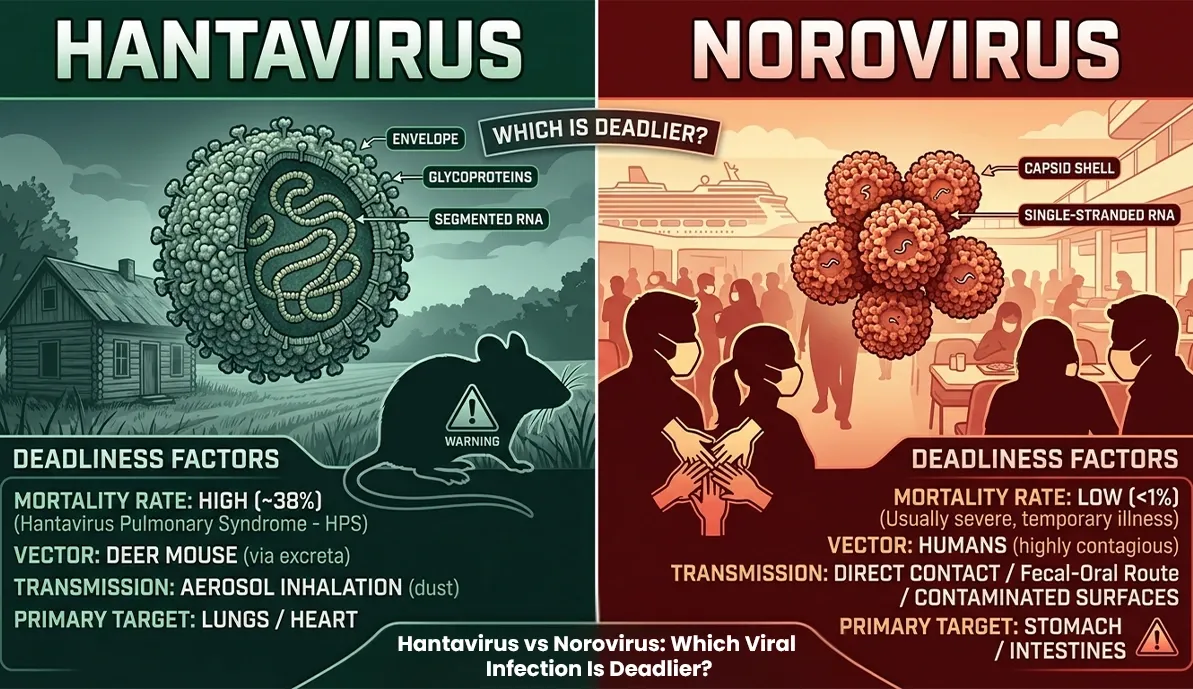
Viral diseases can be highly contagious and present themselves in various forms. Two such viral diseases that garner public interest are hantavirus and norovirus. Though these diseases can have grave consequences for the victim, each differs from the others in terms of transmission and effects on the host organism.
What Is Hantavirus?
Hantavirus is a rare yet potentially dangerous viral disease often transmitted by rodents. Individuals become infected when they inhale airborne particles from rodent excreta, such as urine, saliva, and feces. Different types could lead to a deadly lung condition known as Hantavirus Pulmonary Syndrome (HPS).
Common Symptoms of Hantavirus
Symptoms usually start like the flu before becoming more critical. Early medical attention is crucial because the condition can deteriorate rapidly.
Common symptoms include:
- Muscle aches
- Fever and chills
- Headaches
- Fatigue
- Stomach pain
- Coughing
- Breathing problem
- Vomitting
- Nausea
As the infection progresses, fluid often develops in the lungs, leading to respiratory failure. You can get detailed information on the key symptoms of hantavirus using a symptom checker tool. This is an AI-powered tool that provides relevant information on the key symptoms of the searched disease, along with medication suggestions.
Take Control of Your Health Today
Quickly check your symptoms and understand your prescriptions with our smart, easy-to-use AI tools.
What Is Norovirus?
Norovirus is among the leading causes of stomach ailments globally. This infection is easily spread through the consumption of contaminated food or water. In addition, it can spread through direct contact with an infected person. Outbreaks happen mostly in schools, cruise ships, restaurants, and health facilities. Norovirus infection mainly results in gastroenteritis.
Common Symptoms of Norovirus
Norovirus symptoms generally appear rapidly after exposure. Most people recover within a couple of days, but dehydration becomes dangerous in certain cases.
Common symptoms include:
- Nausea
- Vomitting
- Diarrhea
- Fever
- Body pain
- Weakness
- Dehydration
- Stomach cramps
Young kids, older adults, and individuals with a weakened immune system face a higher risk of health complications.
Comparing How the Viruses Spread
Both viruses spread in unique ways and require different prevention methods. Norovirus spreads easily between individuals, whereas hantavirus mainly spreads through rodent exposure. Understanding these differences helps reduce infection risk.
Hantavirus Transmission
Hantavirus infections most often occur after inhaling contaminated material from rodent excreta. Improper ventilation of places such as sheds, cabins, and storage areas can enhance the risk of infection. The disease cannot be transmitted between people except for some strains, such as the Andes virus.
Norovirus Transmission
Norovirus is highly contagious, spreading easily through contaminated food, water, surfaces, and physical contact. The virus requires only a minimal presence to affect large populations. Inadequate sanitation and shared spaces are common culprits in norovirus outbreaks.
Common places linked to norovirus outbreaks are:
- Schools
- Restaurants
- Cruise ships
- Daycare centers
- Nursing homes
- Hotels
Which Infection Is More Dangerous?
Both viruses can be dangerous, but hantavirus is often regarded as more deadly. There are many fatalities from hantavirus infections, unlike norovirus infections. Nevertheless, norovirus infects more people each year because it is highly infectious.
Why Hantavirus Is Considered Deadlier
HPS can develop swiftly and cause serious lung problems. In some instances, HPS causes patients to develop breathing problems, shock, and organ malfunction. The death rate for some hantavirus infections can be extremely high.
Why Norovirus Still Remains a Major Concern
Though norovirus does not kill healthy adults, it spreads more quickly than hantavirus. In just a few days, it may infect hundreds or even thousands of people. Severe dehydration can be dangerous, particularly among older adults and young children.
Groups at higher risk from norovirus are:
- Young kids
- Elderly people
- Hospital patients
- People with weakened immune systems
Prevention Tips for Both Viruses
Prevention plays a major role in lessening infection risk—good hygeine and environmental safety help lower exposure to both hantavirus and norovirus.
Ways to Reduce Hantavirus Risk
Helpful safety measures to reduce virus risk include:
- Seal holes and entry points in residences
- Avoid contact with rodents and their droppings
- Ventilate closed spaces before cleaning
- Wear gloves and masks while cleaning contaminated surfaces
- Use disinfectant instead of sweeping dry droppings

Ways to Prevent Norovirus
Key prevention habits include:
- Wash your hands regularly with soap and water
- Stay home when sick
- Disinfect commonly touched areas
- Avoid contaminated water and food
- Wash fruits and vegetables properly
Conclusion
Hantavirus and norovirus are both viral diseases with similar levels of severity; however, they differ significantly in modes of transmission, symptoms, and severity. Hantavirus is regarded as being the more lethal of the two due to its complications in the lungs and a higher fatality rate. On the other hand, norovirus is more easily transmitted, leading to global outbreaks. Follow Medipedia for the latest breaking news and updates on hantavirus, and learn how to treat its symptoms. Proper knowledge about symptoms helps take preventive steps to ensure you get the right treatment and medication.