

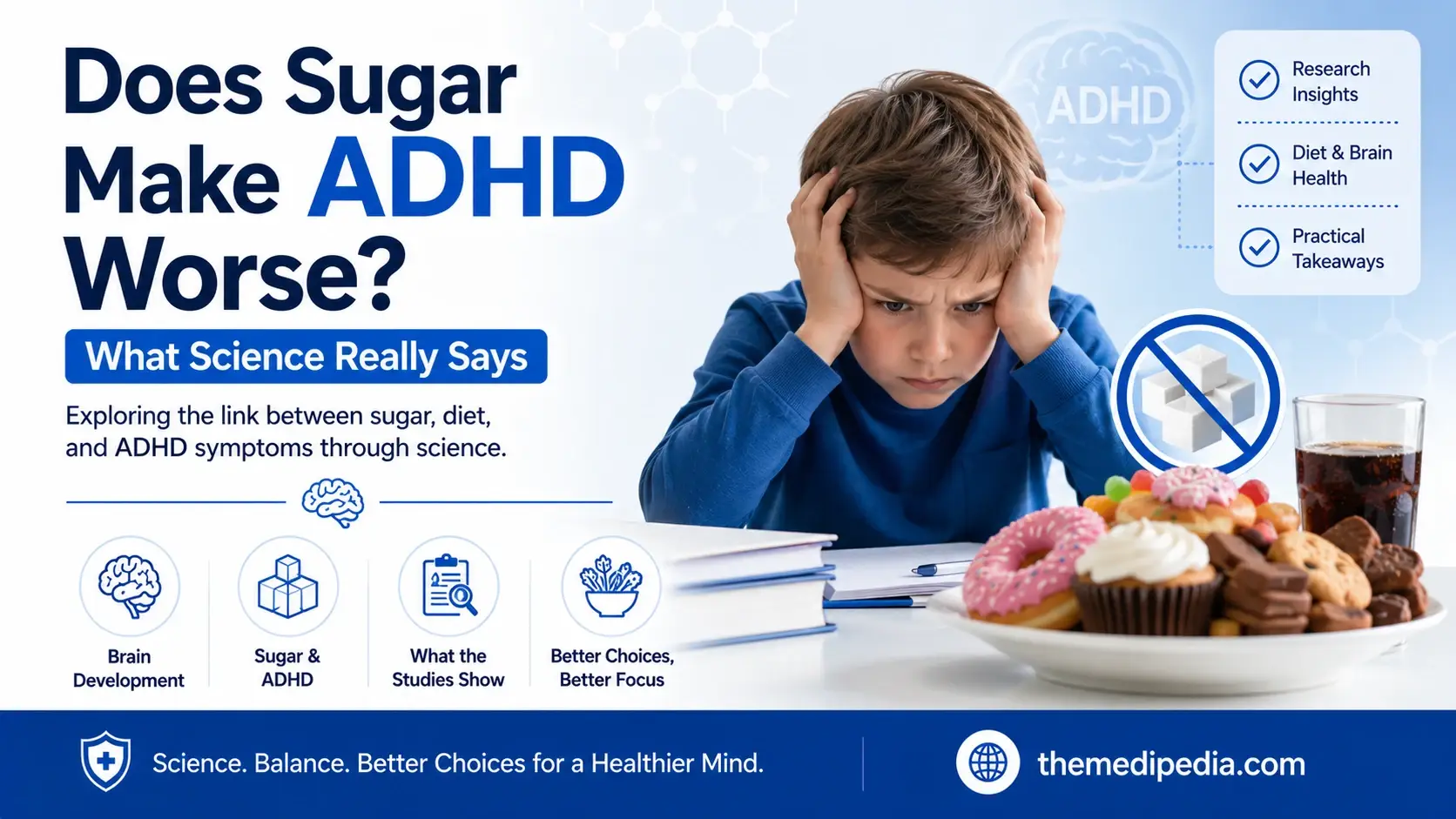
ADHD is a disorder characterized by problems with attention, self-control, and activity. People tend to question whether sugar aggravates the symptoms of ADHD. Sugar is often considered to cause hyperactivity or reduce attentiveness. However, science provides an opinion on the matter that goes beyond simplistic answers like “yes” or “no”. Now, let us analyze the scientific evidence on this topic.
Understanding the Link Between Sugar and ADHD
We need to understand the exact connection between sugar and ADHD. In the following section, let us explore some key factors.
Why People Think Sugar Affects Behavior
It is quite common for people to observe that children become more active after consuming sugary foods. This observation has resulted in the belief that sugar causes hyperactivity among children who have ADHD. Excitement and increased activity associated with birthday celebrations, sweets, and soft drinks lead many to link sugar with mood changes.
However, scientific research proves otherwise. In most cases, factors in the surrounding environment contribute to increased excitability rather than sugar. Exciting environments, sleep deprivation, and group activities are among the factors responsible for the observed effects on children’s behavior.
What Science Says About Sugar and ADHD
Research has not established that sugar adversely affects ADHD to an appreciable degree. Studies in which children were given sugar or a placebo have shown that, generally, parents cannot distinguish between the sugar effect and a placebo.
These studies suggest the following facts:
- Sugar does not increase the degree of hyperactivity in children with ADHD
- The placebo effect plays a critical role in observation by teachers or parents
- ADHD is associated with brain chemistry rather than a simple sugar effect
- Individuals might be slightly sensitive to sugar, but this is not consistent across all subjects
As seen from the above information, sugar does not cause ADHD symptoms. However, it may change energy levels.
How Sugar May Indirectly Affect ADHD Symptoms
As discussed, sugar may not directly trigger ADHD symptoms, but it may indirectly affect health.
Blood Sugar Spikes and Energy Changes
Although it may not be true that sugar causes ADHD, it can have effects on how one feels. Sugar consumption will cause an immediate spike in blood glucose levels. An immediate depletion of energy levels quickly follows this.
The “up-and-down” effect of sugar consumption will result in:
- Irritability or mood swings
- Difficulty concentrating briefly
- Tiredness following sugar depletion
- Cravings for sugary food
It will make one’s experience of these symptoms much more pronounced.
Diet Quality and Brain Function
Diets high in sugar tend to replace other, more nutritious foods, thereby lowering levels of the nutrients that contribute to brain function. Vitamins, minerals, and protein are needed to improve concentration and support emotional well-being.
Poor eating habits associated with diets high in sugar might include:
- Inadequate amounts of fruits and vegetables
- Reduced protein consumption
- Insufficient omega-3 fatty acids
- Increased consumption of processed foods
These factors do not necessarily lead to the development of ADHD, but rather exacerbate its effects.
Apart from certain foods and beverages, there is a strong link between ADHD and anxiety. People who have ADHD frequently experience anxiety in the form of worrying or being fearful and nervous.
Better Food Choices for ADHD Support
Balanced eating practices and reducing sugar from your diet will help support ADHD symptoms.
Balanced Eating Practices That Help Focus
Rather than focusing on sugars alone, the best advice is to maintain a balanced diet. A regular meal plan can facilitate improved focus and energy balance. The following dietary practices are also recommended:
- Eating a protein-filled breakfast, such as eggs or yogurt
- Opting for whole grains instead of refined carbohydrates
- Consuming daily fruits, vegetables, and nuts
- Keeping oneself hydrated by drinking plenty of water
These dietary practices facilitate sustained energy release and improved brain performance.
Practical Tips to Reduce Sugar Overload
It does not mean you have to give up sugar entirely; rather, you need to control your sugar intake to ensure you do not exceed the recommended amount. It only takes small adjustments to effect significant changes in your behavior.
Some simple methods that could help include:
- Avoiding sugary sodas and juices.
- Checking labels to avoid products containing too much sugar.
- Eating natural foods, such as fruits, instead of candies.
- Treating yourself to desserts occasionally, and not regularly.
Nutrition plays a pivotal role in ADHD management. The foods we consume may affect our moods, focus, and energy. A healthy diet may enhance concentration and stabilize our energy fluctuations.
Conclusion
No scientific studies have confirmed the link between sugar and the development and progression of ADHD. This does not mean that consuming large amounts of sugar will not affect the body. It should be noted that the entire diet plays an important role. Follow Medipedia to understand the impact of diet on ADHD symptoms. If you feel like you experience a worsening of ADHD symptoms with high sugar intake, reach out to your doctor. They can take your needs into account when deciding if cutting down on sugar is appropriate for you.